

How To Check Windows Ports
Windows Netstat Control to Bank check Open Ports in Windows
In this tutorial, we will learn how to run the netstat control to check open ports in Windows Operating Organisation. We will besides look at command options and how to use the findstr command (similar to grep) to filter the netstat output.
To check open ports, open up a command prompt (or PowerShell) as ambassador and run the netstat command every bit follows:
netstat -aon The command displays lots of information. What you should pay attention to are Local Addresses that are in the LISTENING country.
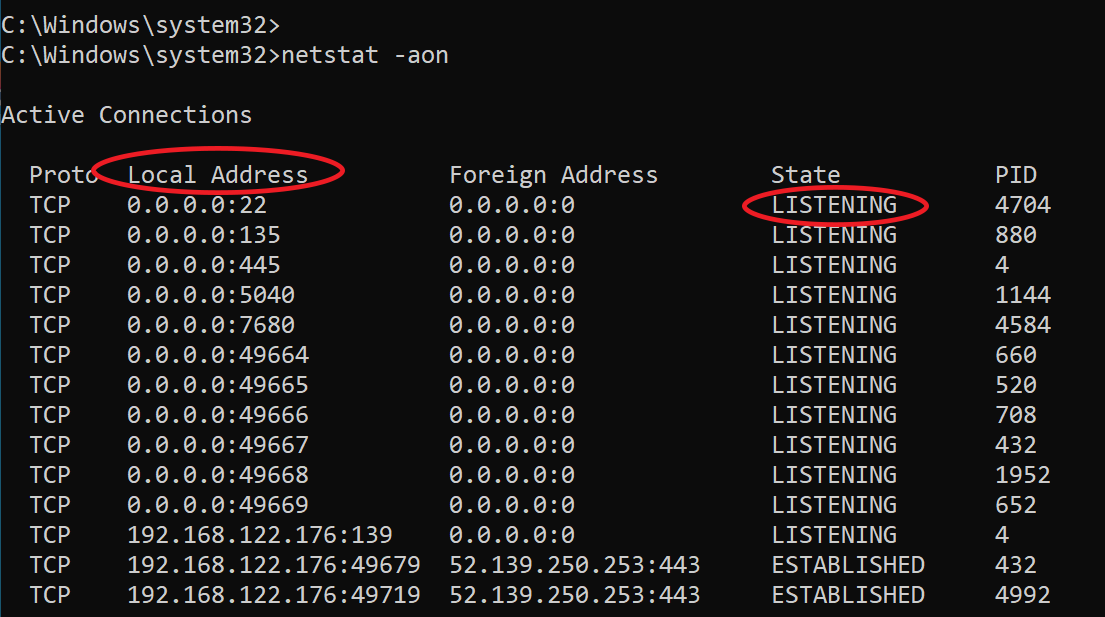
Equally yous tin see in the previous screenshot, In my Windows 10 reckoner, port 22 (SSH) is open up.
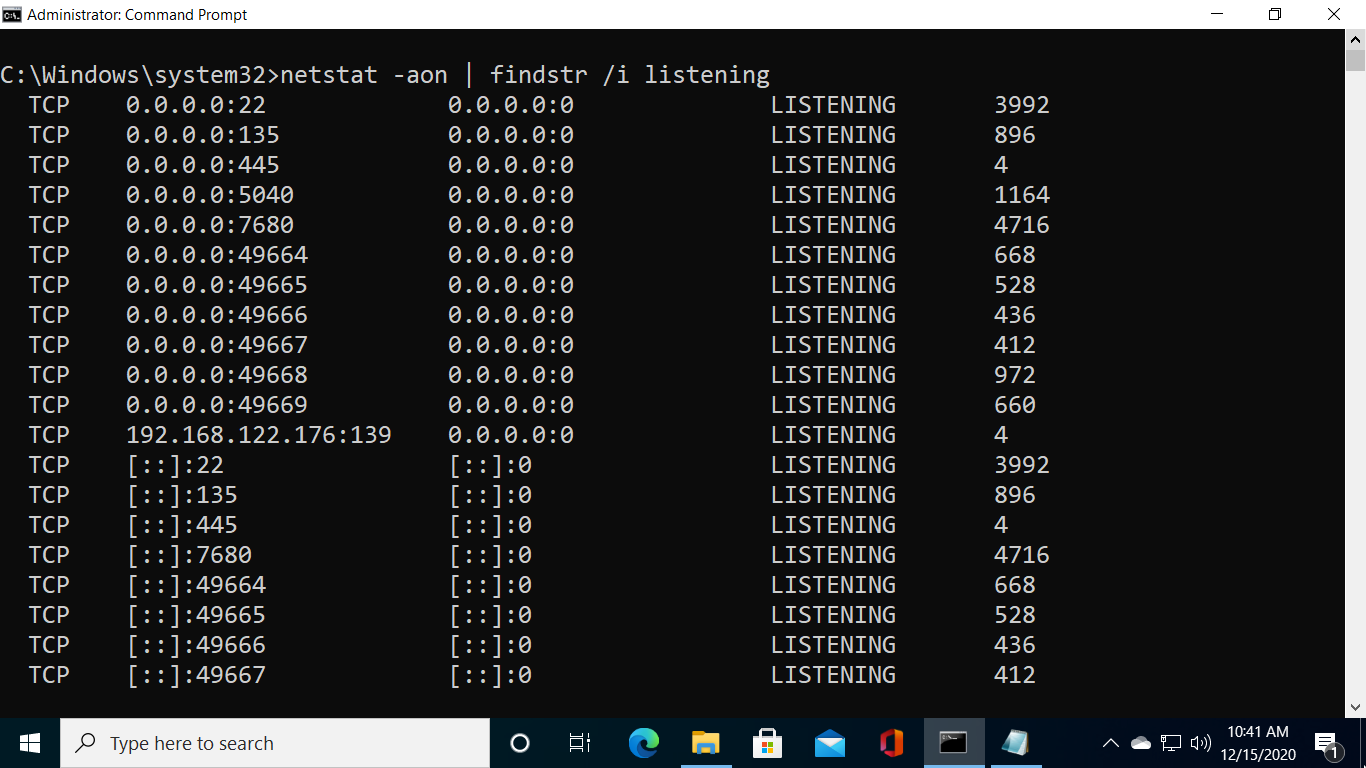
Administrators tin run the following command to bear witness opened ports only without all other details:
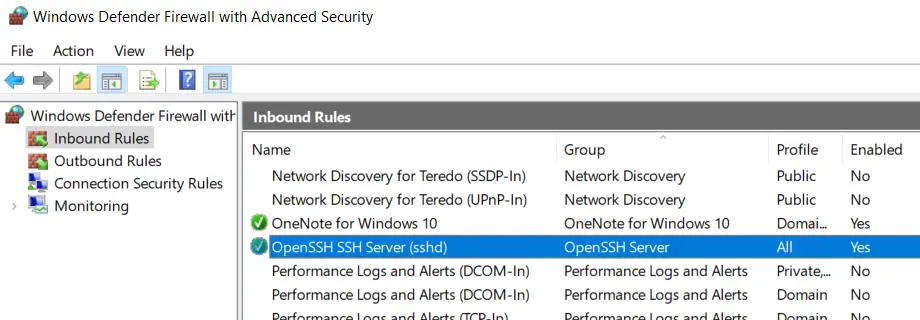
netstat -aon | findstr /i listening I important signal is that the Windows Firewall may block a port even if it is in the listening land. In the Windows Defender Firewall with Advanced Security, at that place has to exist a corresponding inbound firewall dominion to lucifer the listening port (Anything with a green checkmark is an open up dominion).
The Foreign Address column of the output shows the IP address and port of the computer/server at the remote cease of the connexion.
To check that the port is open up from a remote computer, an administrator tin run the telnet control from a remote computer against the IP address of the Windows reckoner.
For instance, to check if port 22 is open, I will run the telnet control from a remote computer as follows:
telnet IP_ADDRESS 22 Replace IP_ADDRESS with the actual IP Address of the Windows estimator.

Filtering netstat using findstr
Administrators can employ the findstr CMD control (which is like to grep) to filter netstat command information based on string patterns.
For instance, run the following control to check TCP connections in TIME_WAIT State.
netstat -a | findstr /i TIME_WAIT The /I pick is for the instance insensitive matching.

Command Options
Windows netstat command, without any command-line arguments, displays active TCP connections.
It also includes some useful command options to testify network connections and ports in various forms, such every bit show connections and opened ports based on the protocol, find the process id of a connection/port, view network statics, and find the application that utilizes connections and ports.
| -a | displays all network connections and ports on which Windows is listening (include both IPv4 or IPv6 addresses). |
| -b | The output shows you which applications are using each active connection and ports (need administrative privileges). |
| -eastward | Displays network statistics, such equally the Errors, the number of bytes, and packets sent and received. |
| -n | Displays addresses and ports in numerical format. |
| -f | When used, the output volition contain Fully Qualified Domain Names (FQDNs) of IP addresses, if available. |
| -o | Displays an additional column that contains the Process ID (PID). |
| -p | Display data for a specific protocol (eastward.g., -p TCP). The Protocol can exist one of the following: TCP, UDP, TCPv6, or UDPv6. If combined with the -due south selection, Protocol tin can be TCP, UDP, ICMP, IP, TCPv6, UDPv6, ICMPv6, or IPv6. |
| -r | Check Windows routing table. |
| -s | Displays detailed network statistics for each protocol (IPv4, IPv6, ICMPv4, ICMPv6, TCP, and UDP). |
| interval | Sets Time interval (in seconds) to automatically update the output. See examples to learn more than. |
Examples: Using the netstat command
List all Active TCP connections:
netstat Bank check open ports:
netstat -aon | findstr /i listening Only want to see data virtually TCP protocol:
netstat -a -p tcp Show network statistics:
netstat -s Real-time network monitoring - In the following case, we set up a five second time interval to check active network connections in real-time. The number v causes the command to repeat every 5 seconds (Printing CTRL+C to quit).
netstat -n v If yous need more information nigh the Windows netstat command, type netstat \? in the control prompt.
Source: https://www.configserverfirewall.com/windows-10/netstat-command-to-check-open-ports-in-windows/
Posted by: whitemakilds.blogspot.com
0 Response to "How To Check Windows Ports"
Post a Comment