

How To Clean Vintage Metal Chocolate Molds
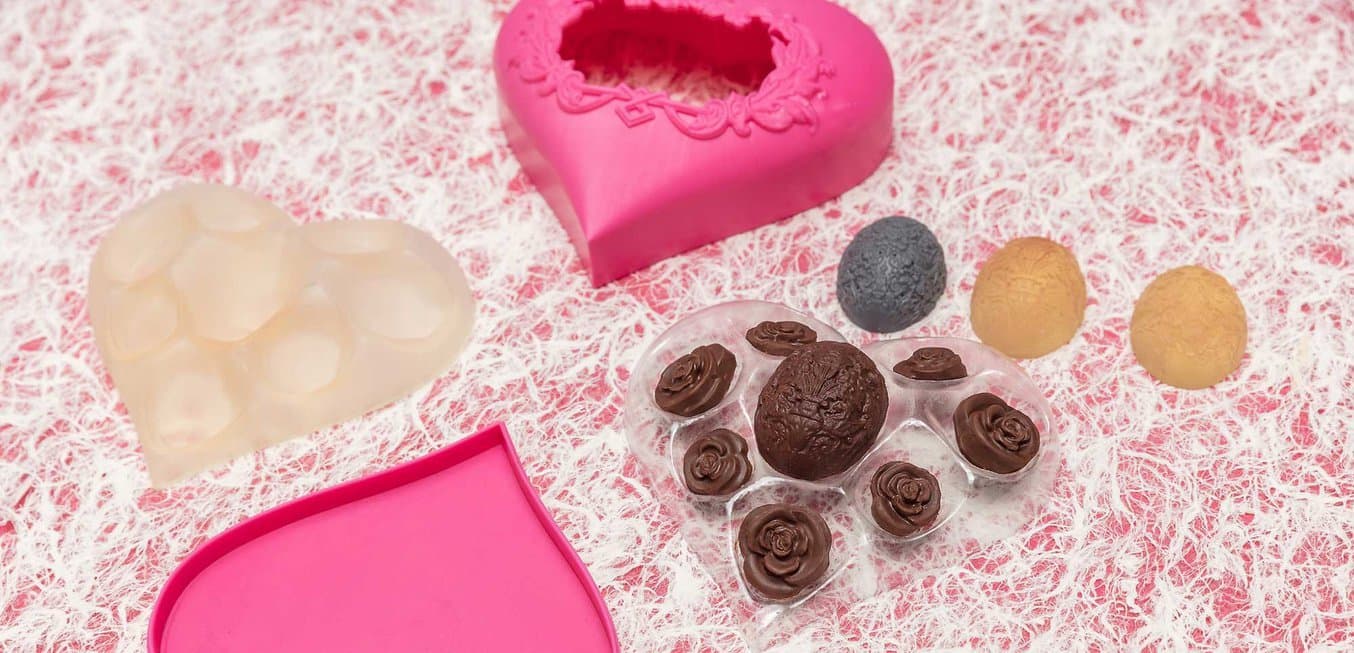
The nigh common fashion to make chocolates and confections is to use pre-fabricated silicone molds, which are filled with molten chocolate and cooled. Past designing and 3D printing custom chocolate molds, information technology's possible to add a level of detail and customization that was previously just bachelor to skilled artisans. The tools and techniques for creating 3D printed food molds are like shooting fish in a barrel to master, and the results are often stunning.
Custom molds for chocolate, candy, and other types of confectionary must be food safe, flexible, and, ideally, reuseable. While prints made from stereolithography (SLA) resins aren't suitable for directly molding foods, an SLA 3D printer is the perfect tool to create mold negatives, which can be vacuum formed using food-safe plastic.
Read our guide for an introduction to food safe 3D printing, food safety considerations for 3D printing, and a multifariousness of methods to produce food safe products with mutual 3D press technologies.
The post-obit items are needed to create custom, food-safe molds through 3D printing and vacuum forming:
- Formlabs Form 2 or Form 3 stereolithography 3D printer
- Formlabs High Temp or Standard Resin
- Thermoforming machine and food rubber HDPE sheet (0.015 in)
- Couverture chocolate
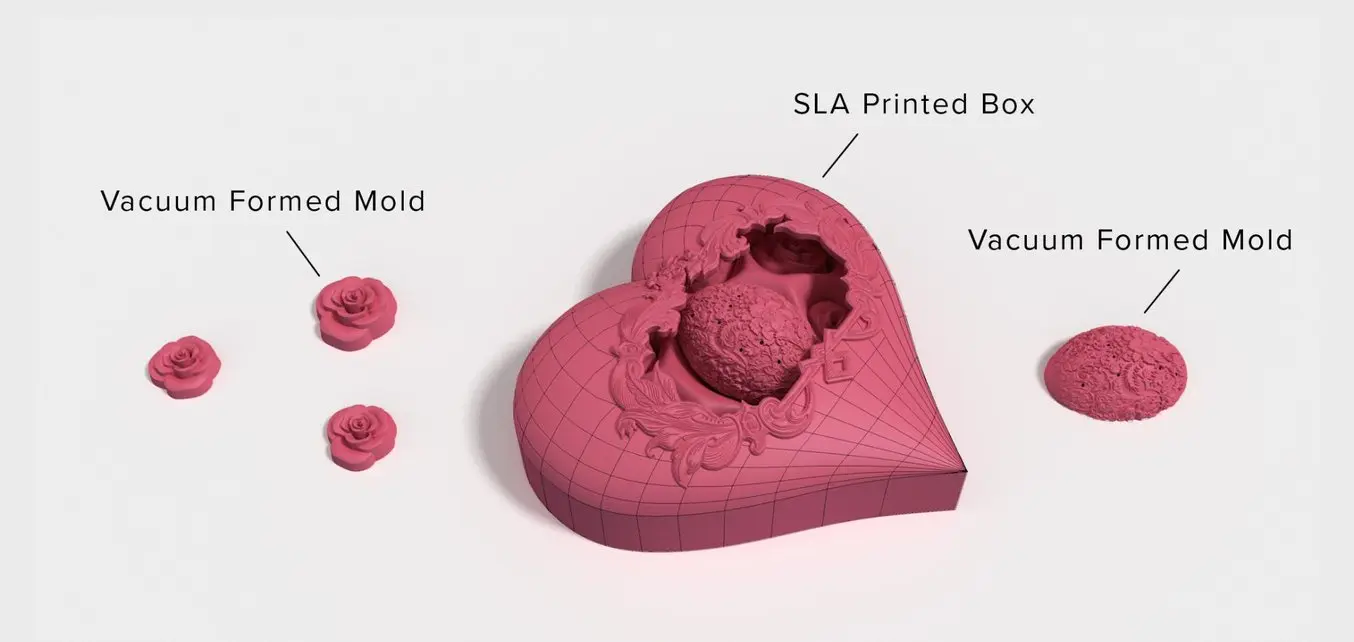
With 3D printing and vacuum forming, you lot can make your own intricate chocolates.
The kickoff step is to blueprint the mold. For our Valentine's Solar day-themed chocolates, nosotros're molding two designs: a flower and an ornate egg. Y'all tin can apply about any model, so long as it has a apartment surface that tin can sit flush with the a vacuum forming machine. Vacuum forming is a process where a plastic film is heated and pulled against a mold past a vacuum. The most successful models won't have undercuts, which can trap the mold in the vacuum forming canvas. If you're non an experienced CAD user, lithoforms are a nifty way to hands create 3D models from second images that you or your customers can design.
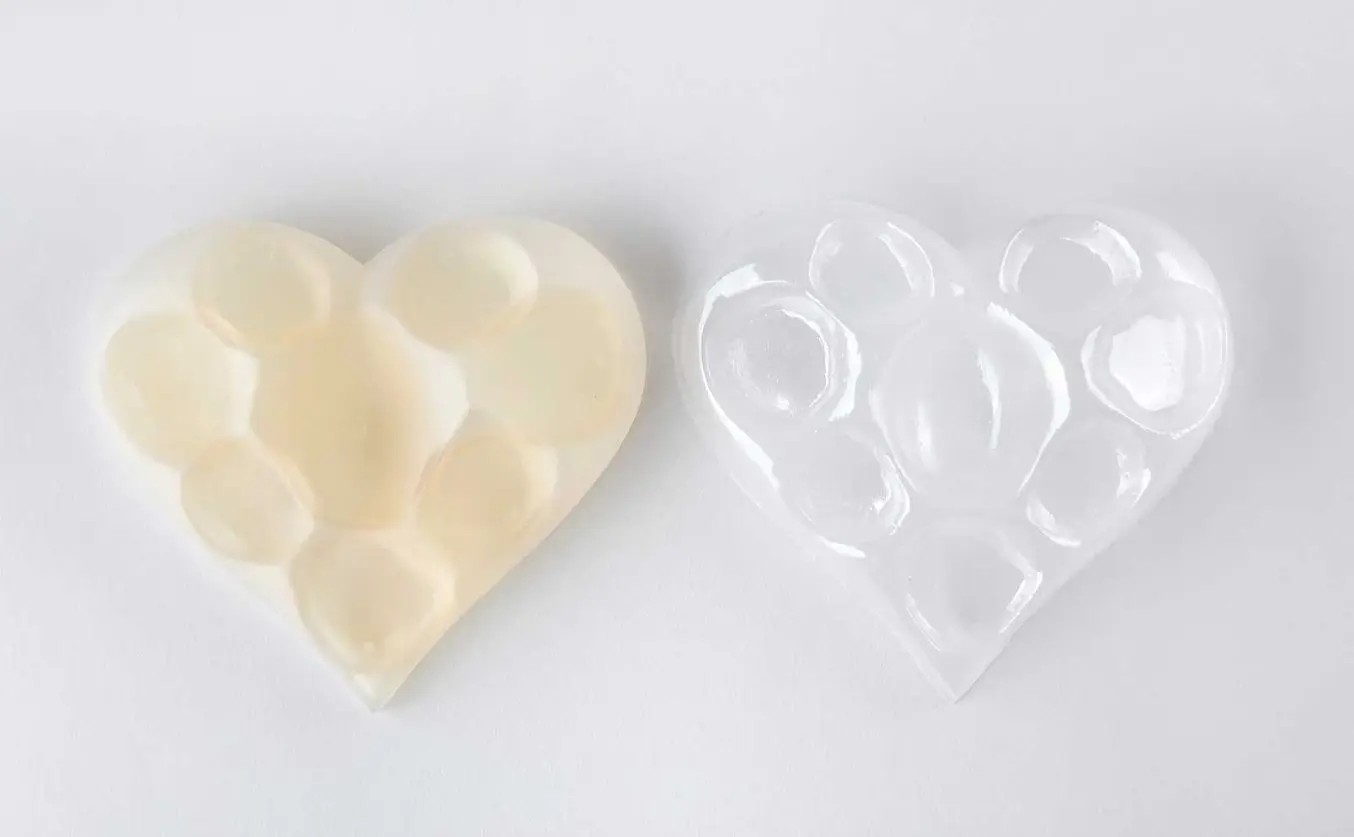
If there are concave regions in your model, printing or drilling one mm holes at the everyman point in the region will assist the vacuum forming process pick up the near possible item from your print.
Print the mold in a rigid fabric. Formlabs High Temp Resin is platonic for printing vacuum course molds; it will non deform or degrade with exposure to heated plastic, even later multiple uses. Standard Resin will likewise work, though it may degrade over fourth dimension if used repeatedly.
Vacuum form the mold using food rubber plastic such as high-density polyethylene (HDPE). For the mold to be flexible, the plastic canvass should be effectually .01 in thick. There are many options for thermoforming machines, ranging from cheap and small, to large units with a lot of space.
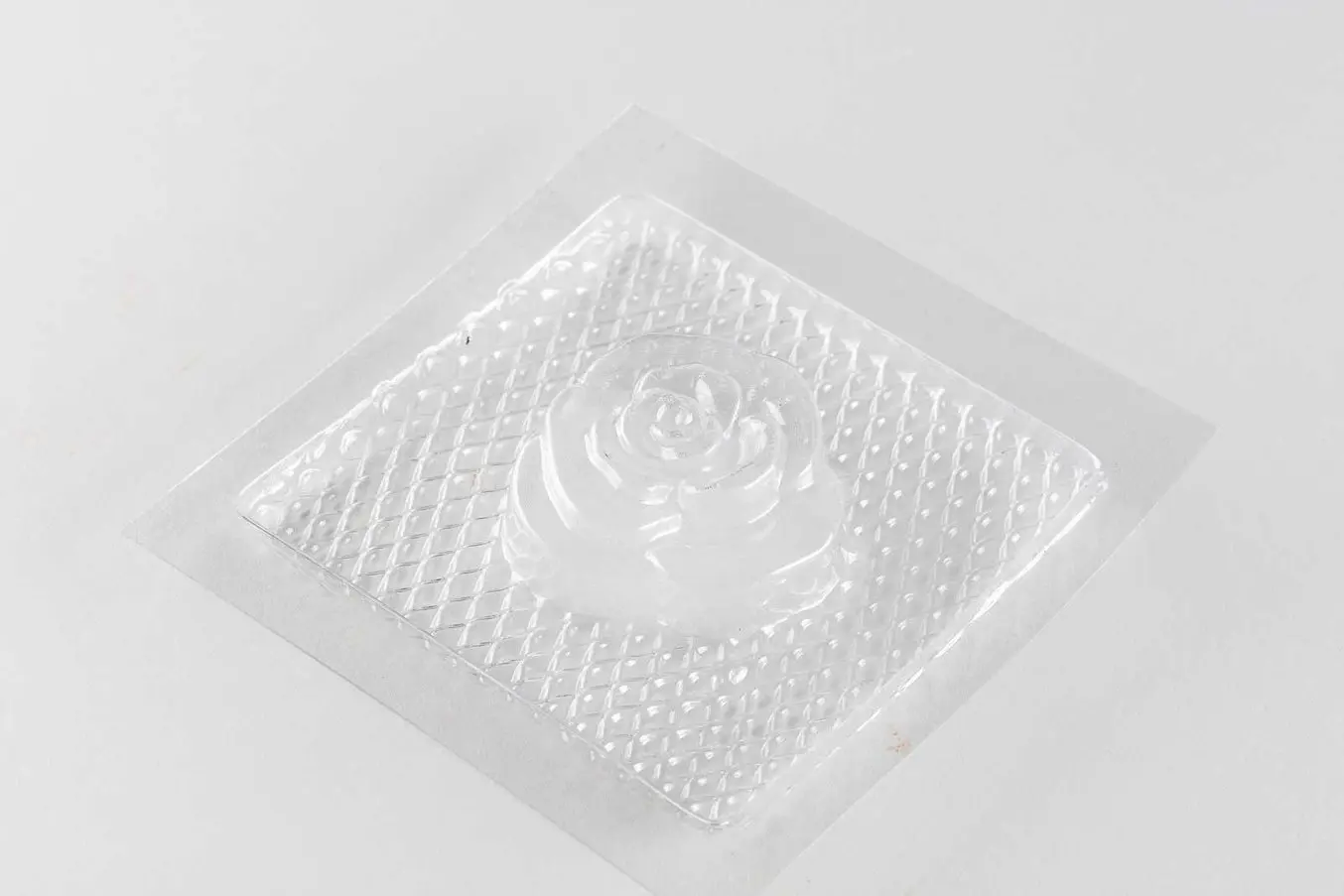
Vacuum form the mold using food safe plastic such as high-density polyethylene (HDPE).
If your goal is to create a reusable mold rather than a unique one-off, you can easily increase the size of your batches by vacuum forming multiple prints simultaneously to make a large multi-mold tray.
Launder the mold with soap and water. Wiping the interior surface of the mold with a small corporeality of canola oil volition help make clean information technology of any droppings, and help the chocolate release from the mold.
Temper the chocolate and pour it slowly into the plastic shell. While the chocolate is even so liquid, tap the mold lightly on a table to give the open tops a apartment surface. Identify the chocolate in the refrigerator to cool and harden.
Advisedly remove the chocolate by flexing the mold. Utilise gloves when handling chocolates to avoid melting them.
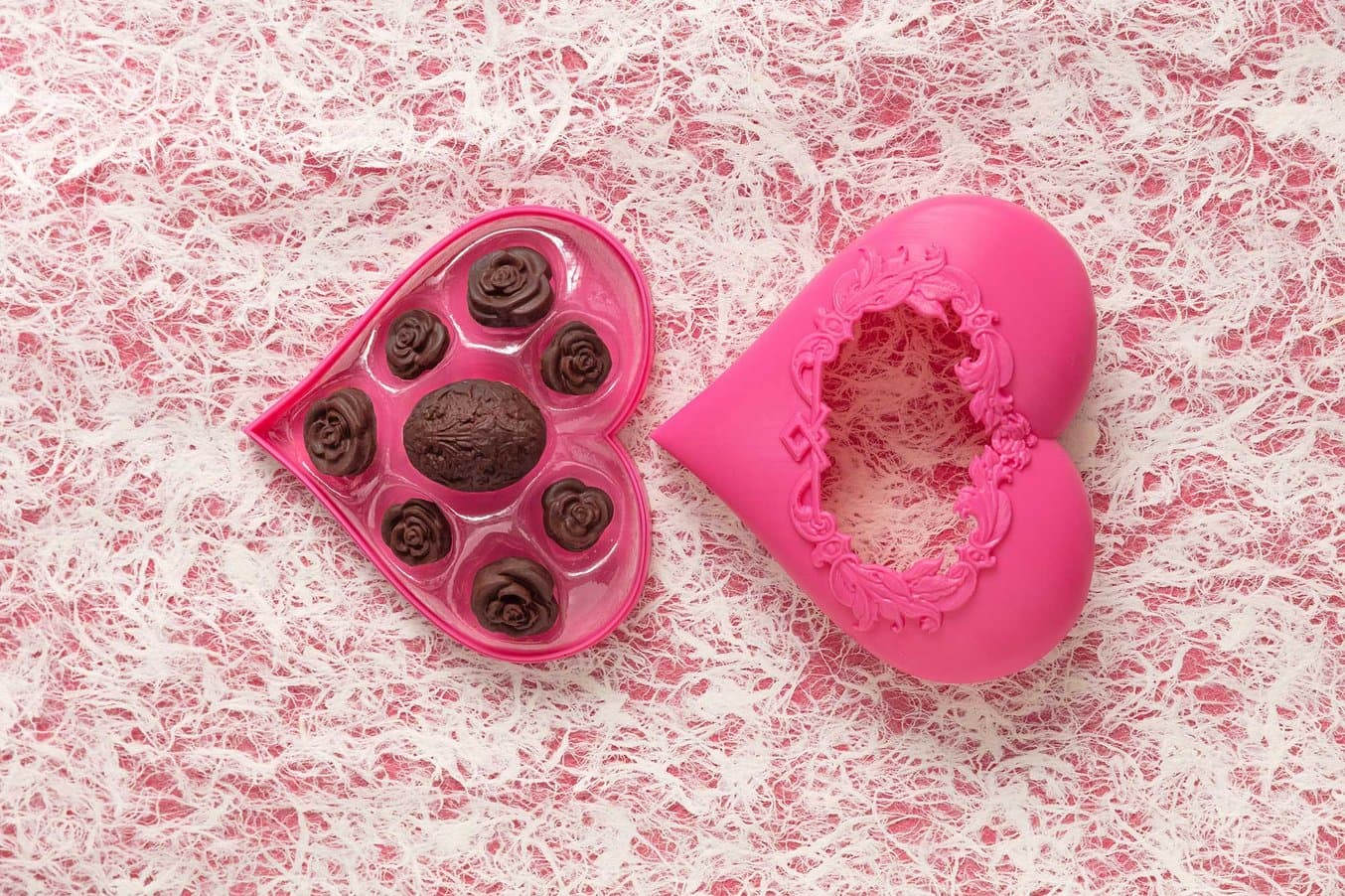
Nosotros used the Class 2 to 3D impress a custom box for our chocolates, using red colored resin that we dyed.
You can too use 3D printed thermoform molds to make custom sculpted chocolate packaging, customized packaging trays, as well every bit other products, like artisanal soaps, which can exist poured and solidify at room temperature.
We used the Form 2 to print this Valentine's box using red colored resin, and printed some other thermoform mold for the plastic tray that holds each customized chocolate in place.
Like thermoforming, injection molding and casting can open up a wide range of material possibilities alongside your 3D printer. Watch our webinar, Making Molds with 3D Printing, to learn more about these techniques and design guidelines for each.
Sentinel the Webinar Now

Source: https://formlabs.com/blog/custom-chocolate-molds-3d-printing-vacuum-forming/
Posted by: whitemakilds.blogspot.com
0 Response to "How To Clean Vintage Metal Chocolate Molds"
Post a Comment